

Yes — in many cases you do need planning permission (or, more precisely, a permit) when replacing a septic tank, especially when major components (tank + drainfield) are changed or relocated. For minor repairs the rules are more lenient. Whether you need full approval, repair permits, or exemptions will depend on your local health department, state laws, and whether your replacement triggers changes in layout, capacity, or environmental impact.
Below is a comprehensive guide to help you navigate septic tank planning permission, septic system guidelines, and septic tank regulations, especially in Florida contexts — plus a step-by-step workflow and best practices.
Why the Question Matters
Many homeowners assume that planning permission is only required for new septic systems. However, replacements and modifications often fall under the same oversight. Permits exist to ensure compliance with health and environmental standards, protect groundwater, maintain proper setbacks, and enforce enhanced treatment in sensitive areas. Understanding when and how these rules apply can save you from costly fines, project delays, or system failures.
Key Concepts & Regulatory Frameworks
What “Planning Permission” Really Means for Septic Systems
In the context of septic systems, planning permission typically means obtaining a construction or repair permit from local or state environmental or health departments.
For new systems, these permits are mandatory. But even a septic tank replacement may require design review or a repair permit, depending on the scope of work. Full system replacements that alter the design or move the location are often treated the same as new installations.
Florida’s Oversight: OSTDS & DEP / DOH Rules
In Florida, septic systems are known as Onsite Sewage Treatment and Disposal Systems (OSTDS). Their installation and regulation fall under Florida Statutes Section 381.0065 and Chapter 62-6 of the Florida Administrative Code (F.A.C.).
The Florida Department of Health (DOH) and, in certain areas, the Florida Department of Environmental Protection (DEP) handle septic system permits and compliance enforcement. These agencies ensure all systems meet the state’s health, safety, and environmental requirements.
When New System Permits Are Required
A new septic system installation always requires a construction permit. In most Florida counties, this means submitting:
- A complete application
- A site plan
- Soil evaluation or percolation test results
- Payment of all applicable fees
For example, in Lee County, a new septic permit typically costs around $390, plus additional evaluation fees. A “complete septic system replacement” — meaning a full tear-out and rebuild — may also require a new system permit.
Additionally, in areas known as Priority Focus Areas, homeowners must install Enhanced Nitrogen-Reducing Systems (ENR-OSTDS) to reduce nitrogen pollution and protect water resources.
When Replacement or Repair Permits Are Required (or Exemptions Apply)
Not all septic work requires full planning permission. Here’s how to determine what applies:
- Minor repairs — Replacing small components like lids, risers, or short pipe sections may qualify for simplified or repair permits.
- Failing system repairs — When part of a system fails or needs modification, homeowners must submit a Repair Permit Application (often called a Failing Septic System Repair Application).
- Full replacements — Replacing both the tank and drainfield, or changing the system’s location or capacity, triggers new permit requirements.
- Remodels without added bedrooms — In some cases, interior remodels that don’t increase wastewater load or add bedrooms may not require an upgrade or permit.
In Lee County, repair permits cost about $350 and require submission of a signed application, repair evaluation form, and detailed site plan.
If your county participates in a private provider inspection program, you may hire approved private inspectors instead of the health department.
Septic System Guidelines & Regulations to Know
Florida has strict septic tank regulations and septic system guidelines to protect public health and the environment. Below are the essentials every homeowner should understand.
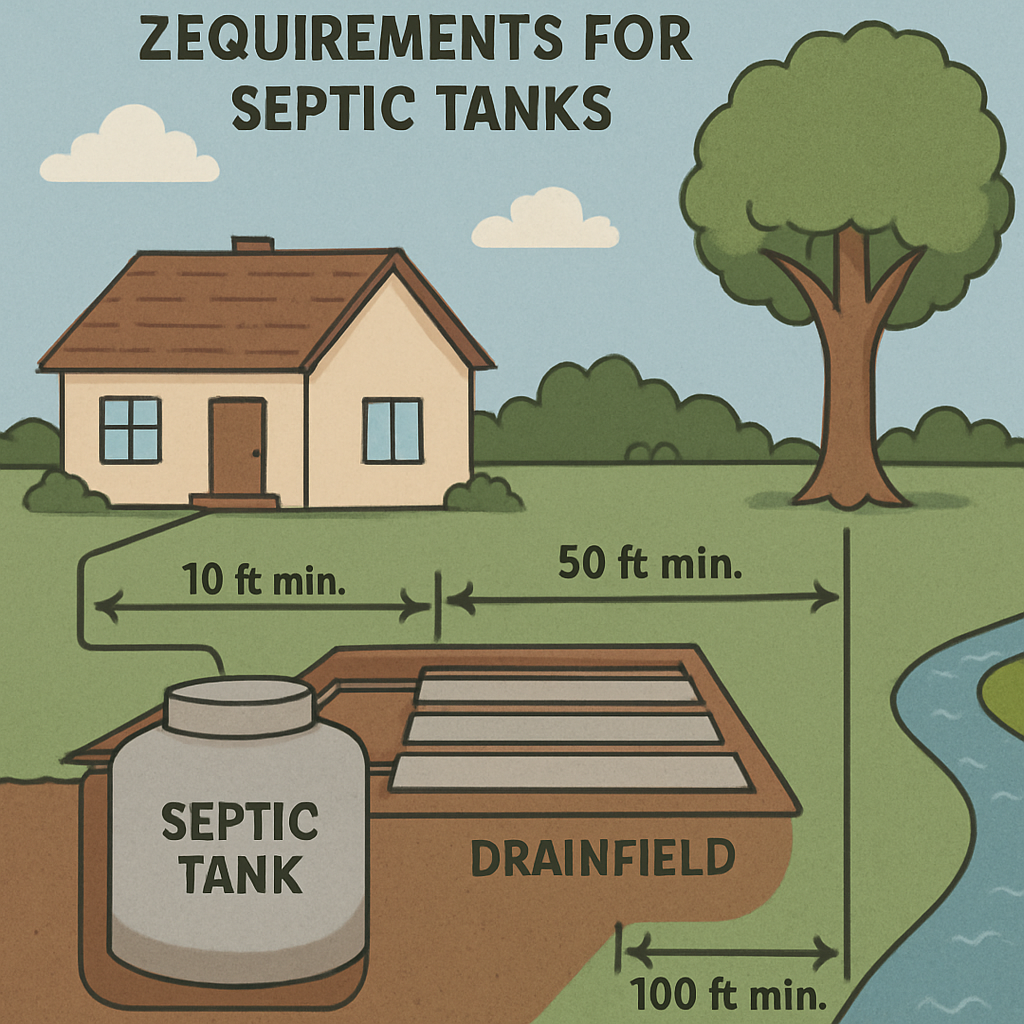
Setbacks & Minimum Distances
Septic systems must maintain minimum distances from:
- Private wells: at least 75 feet
- Tidal water bodies: at least 75 feet
- Storm drains and property lines: 10 feet or more
These setbacks prevent contamination of water sources and flooding during heavy rainfall. The system must also account for high water tables, soil absorption capacity, slope, and flood zone elevations.
Soil & Site Evaluation
Before approval, a site evaluation or soil percolation test is required. This determines:
- Soil suitability for wastewater absorption
- Depth to the water table
- Slope and drainage characteristics
The site plan must clearly show property boundaries, existing structures, water lines, wells, and proposed system layout. These evaluations help ensure the site can safely handle the septic system’s capacity.
Performance & Alternative Systems
Florida also allows alternative and performance-based systems, including:
- Aerobic treatment units
- Nitrogen-reducing systems
- Advanced wastewater treatment systems
These systems are typically required in environmentally sensitive zones or areas where traditional drainfields can’t meet modern water quality standards.
Permitting Fees & Process
Permit costs vary by county:
- Pasco County: around $390 (includes soil testing and inspection)
- Lee County: around $350 for repair or replacement permits
Larger systems (e.g., drainfields over 1,000 sq. ft.) or higher-capacity setups may require engineer-sealed plans before approval.
Legal Statutes & Contractor Requirements
Florida law prohibits constructing, repairing, or modifying any septic system without first obtaining a permit.
Only licensed contractors can perform septic system work under Chapter 489 of Florida law. However, homeowners working on their own single-family residence are exempt from licensing but must still obtain permits.
Step-by-Step: Getting Planning Permission or a Permit for Septic Work
Follow these steps to stay compliant and streamline your approval process.
| Step | Action | Why It Matters |
| 1. Contact your local health department | Ask for OSTDS rules and permit applications | Each county may have unique requirements |
| 2. Determine your project type | Identify if it’s a repair, replacement, or new install | Defines the level of review and paperwork |
| 3. Schedule a soil test / evaluation | Commission a certified soil test and analysis | Determines drainfield and system design |
| 4. Create a detailed site plan | Include structures, lot lines, setbacks, water lines | Required for review and approval |
| 5. Submit your application | Provide forms, evaluations, site plan, and fees | Triggers the official review process |
| 6. Respond to revisions | The health department may request updates | Avoid delays by providing timely corrections |
| 7. Get permit approval | Receive authorization to start work | Legal go-ahead for construction |
| 8. Hire a licensed contractor | Work with certified experts like Diversified Plumbing Services | Ensures compliance and quality |
| 9. Schedule inspections | County or private inspector checks progress | Final approval depends on passing inspection |
| 10. Keep records | Retain permits, site plans, and maintenance logs | Useful for future upgrades or resale |
Your plumbing or septic contractor — like Diversified Plumbing Services — can often handle the paperwork, coordination, and inspections for you.
Do You Need Planning Permission for a Septic Tank Replacement?
To summarize:
- Minor repairs: usually don’t require septic tank planning permission; a basic repair permit may be enough.
- Full replacements: almost always require a permit and plan review.
- System relocations or expansions: treated as new installations requiring full documentation.
- Sensitive zones: may trigger stricter septic tank regulations and require enhanced nitrogen systems.
Always verify with your local health or environmental department before starting any work. Their requirements supersede general guidance.
Practical Tips & Common Pitfalls
- Start early: Permit processing can take several weeks.
- Hire qualified professionals: Avoid DIY errors that can lead to fines or denial.
- Ask for clarity on costs: Ensure your quote includes design, application, and inspection fees.
- Anticipate upgrades: Some areas require nitrogen-reducing systems even for replacements.
- Keep documents safe: Maintain your permits, as-built plans, and inspection reports.
- Don’t rely on “grandfathering”: Older systems aren’t automatically exempt from new standards.
- Explore variance options: If your property can’t meet setback rules, request a variance early.
Why Choose Diversified Plumbing Services
At Diversified Plumbing Services, we understand that navigating septic permits and planning can feel overwhelming. Our licensed team provides:
- Expertise in Florida septic tank regulations
- Full permit application support
- Site evaluations and system design assistance
- Complete installation, repair, or replacement services
- Coordination with inspectors and regulators
Whether you’re upgrading, replacing, or installing a new system, we make the process seamless and compliant.
Conclusion
In short, yes — you often do need planning permission for a septic tank replacement, particularly if major system elements or the design are changing. Minor repairs may only require simple repair permits, but any substantial work typically falls under Florida’s septic tank regulations.
If you need expert help with septic permits, planning, or installations, Diversified Plumbing Services is ready to assist. Reach us directly at (239) 850-6674 or info@servicedps.com. We’ll help your project run smoothly, efficiently, and in full compliance with septic system guidelines.